Keir Starmer’s India Visit Strengthens Vision 2035 Partnership
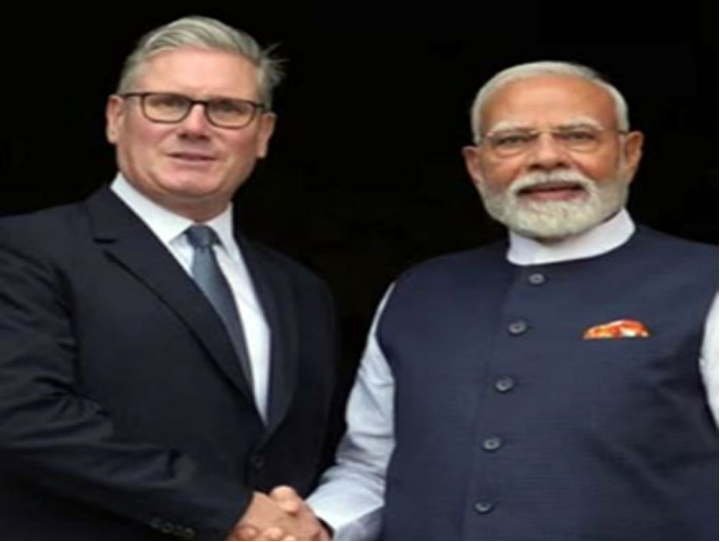
The formal arrival of UK Prime Minister Keir Starmer in India on 8–9 October 2025 marked a significant milestone in the bilateral relationship between the United Kingdom and India. Invited by Indian Prime Minister Narendra Modi, this was Starmer’s first official visit to India and a key moment to deepen the already elevated ties between the two nations.
A Roadmap for the Future: Vision 2035
At the heart of this visit lies the strategic framework known as the India–UK Vision 2035 — a decade-long, time-bound roadmap launched earlier in July 2025, during PM Modi’s visit to the UK.
The Vision 2035 agenda outlines five core pillars of cooperation:
- Trade & Economic Growth
- Technology & Innovation
- Defense & Security
- Climate, Energy & Clean Technology
- Education & People-to-People Links
Thus, the visit in October served not just as a diplomatic courtesy but as a moment to reinforce that roadmap with concrete action and institutional momentum.
Key Elements of the Visit
- 1. High-level Engagement – On 9 October in Mumbai, Prime Ministers Modi and Starmer held talks with business, industry and financial leaders to review the progress of the Comprehensive Strategic Partnership under Vision 2035.
- 2. Business and Investment Focus – A large UK-delegation accompanied Starmer: 125 CEOs, university vice-chancellors and cultural figures. The goal: to catalyze bilateral investment in sectors such as infrastructure, clean energy, advanced manufacturing, defense, education, professional services and fintech.
- 3. Innovation & Fintech – Both leaders delivered keynote addresses at the 6th edition of the Global Fintech Fest in Mumbai. The focus: fintech, AI, emerging technology and the financial-services link between the UK and India.
- 4. Defense & Security Cooperation – The bilateral agreed to finalize a 10-year Defense Industrial Roadmap under Vision 2035 — shifting from buyer-seller models to co-design, co-development and co-production of advanced technologies (jet engines, naval propulsion, underwater systems).
- 5. Institutional Mechanisms – The reset of the Joint Economic and Trade Committee (JETCO) was welcomed, to govern the implementation of the India–UK Comprehensive Economic and Trade Agreement (CETA) and monitor progress across trade, investment and technology.
Why This Visit Matters
- Scale and Ambition: The visit reflects an evolution of ties from transactional to strategic. Vision 2035 is not a generic statement but embeds measurable mechanisms (annual reviews by Foreign/External Affairs Ministers) and sector-specific roadmaps.
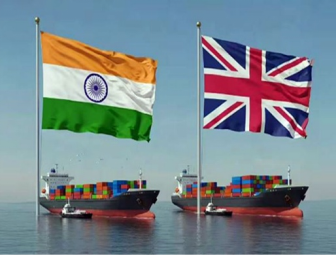
- Economic Potential: The UK–India bilateral trade – currently around US$56 billion – is expected to grow significantly under the framework of CETA and Vision 2035, through deeper market access, investment, connectivity and supply-chain links.
- Tech and Innovation Leap: For India, the UK is not just a trading partner but a collaborator in frontier technology – AI, quantum computing, critical minerals, telecom, biotech. For the UK, India provides scale, dynamism and access to Asia’s fastest-growing major economy.
- Geopolitical Depth: With the Indo-Pacific region becoming an arena of strategic competition, the UK’s “tilt” and India’s maritime interests align. The defense collaboration signals both countries’ recognition that their partnership has strategic, not just economic, dimensions.
Key Challenges Ahead
- Implementation Discipline: Vision 2035 is only as credible as its follow-up. Analysts note that institution-building (formal ministerial 2+2 dialogues, joint monitoring mechanisms) remains less developed compared with India’s ties with other major powers.
- Visas, Mobility and People-to-People Ties: While trade and investment get headlines, people-to-people links (migration, student mobility, cultural exchange) remain sensitive. Reforms in visa and work-mobility frameworks are required to underpin the partnership’s human dimension.
- Environmental & Trade Frictions: The UK’s Carbon Border Adjustment Mechanism (CBAM) and India’s carbon-intensive exports pose potential friction points even as the trade deal opens new markets.
- Geopolitical Balance: India’s strategic autonomy and colonial history with the UK both complicate the relationship. Domestic politics in the UK (diaspora issues) and India (legacy concerns) can influence bilateral dynamics.
What to Watch for Next
- Ratification of CETA and its full implementation: the UK and India will look to translate the blueprint into real trade flows and investment deals.
- Launch of key institutional hubs: AI Centre, Connectivity & Innovation Centre, Critical Minerals Guild between the two countries.
- Defense industry milestones: co-production contracts, joint manufacturing units, export-oriented defense ecosystems.
- Green finance and clean-technology collaboration: new funds, joint research, offshore wind, hydrogen and renewable-energy projects.
- People-to-people programmes: expanded student/exchange mobility, university campuses, cultural co-production (films, arts, sport).
In Sum
The October 2025 visit of Prime Minister Keir Starmer to India, and the reaffirmation of the India–UK Vision 2035 framework, mark a major step in the transformation of the bilateral relationship. The two nations have moved from broad friendship to deep partnership — anchored in business, innovation, defense, sustainability and global governance. What matters now is execution: a decade of measurable outcomes, backed by institutional discipline, will determine whether Vision 2035 delivers on its promise.

...
...
...

...