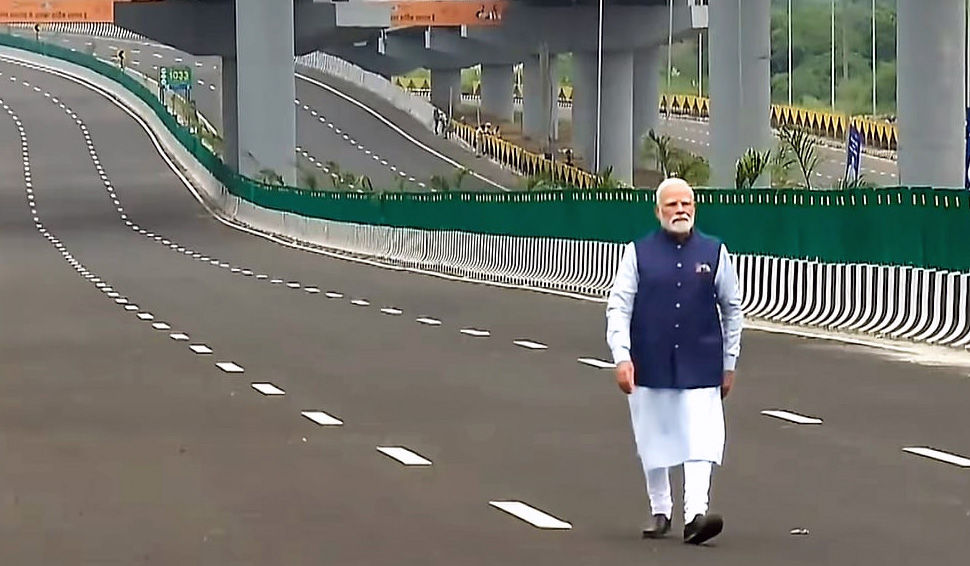
PM Modi Inaugurates ₹33,500 Crore Development Projects; Vows To Make Delhi World-Class
Narendra Modi inaugurated a series of development projects worth ₹33,500 crore in Delhi, underscoring the government’s commitment to transforming the national capital into a world-class city with modern infrastructure, improved connectivity, and enhanced quality of life for its residents. The large-scale initiatives span multiple sectors, including transportation, housing, urban development, and public services, reflecting a comprehensive approach to urban modernization.
Addressing a gathering during the inauguration ceremony, the Prime Minister emphasized that Delhi, as the heart of the nation, must set an example in terms of infrastructure, sustainability, and livability. He highlighted that these projects are not merely about construction but about creating a future-ready city that meets global standards while preserving its cultural heritage. According to him, the vision is to ensure that every citizen benefits from efficient services, cleaner surroundings, and better opportunities.
A major focus of the newly launched projects is on strengthening urban mobility. With Delhi facing persistent challenges such as traffic congestion and pollution, the government has prioritized expanding road networks, upgrading public transport systems, and integrating different modes of transportation. These efforts are expected to significantly reduce travel time, improve connectivity between key areas, and promote the use of public transport over private vehicles. The initiatives also aim to support environmentally sustainable solutions, contributing to cleaner air and reduced carbon emissions.
In addition to transport infrastructure, the projects include the development of housing and urban amenities. Affordable housing schemes are being accelerated to provide better living conditions for economically weaker sections and middle-income families. The government has reiterated its commitment to ensuring that every citizen has access to safe and dignified housing. Urban redevelopment projects are also being undertaken to transform older and congested areas into well-planned spaces with modern facilities, green zones, and improved civic infrastructure.
The Prime Minister also stressed the importance of digital infrastructure and smart city initiatives in making Delhi globally competitive. Several projects focus on enhancing digital connectivity, improving governance through technology, and enabling real-time monitoring of civic services. These steps are expected to make public administration more transparent, efficient, and citizen-centric. Smart solutions such as intelligent traffic management systems, automated waste management, and energy-efficient public utilities are being integrated into the city’s framework.
Another key component of the development package is the strengthening of healthcare and education infrastructure. New facilities and upgrades to existing institutions aim to provide better access to quality healthcare and learning opportunities. The government believes that investing in human capital is essential for sustainable growth and long-term development. By improving these sectors, the initiatives seek to enhance overall well-being and productivity among citizens. In addition to transport infrastructure, the projects include the development of housing and urban amenities. Affordable housing schemes are being accelerated to provide better living conditions for economically weaker sections and middle-income families. The government has reiterated its commitment to ensuring that every citizen has access to safe and dignified housing.
Environmental sustainability has also been placed at the center of the development agenda. The projects include measures to increase green cover, rejuvenate water bodies, and promote renewable energy usage. Efforts to clean rivers, improve waste management systems, and reduce pollution levels are being intensified. The Prime Minister reiterated that development and environmental conservation must go hand in hand, and Delhi’s transformation should serve as a model for other cities in the country.
During his address, the Prime Minister pointed out that the scale and speed of these projects reflect a new approach to governance, where timely execution and accountability are prioritized. He credited the coordinated efforts of various government agencies and stakeholders for making these initiatives possible. He also emphasized the importance of public participation, urging citizens to take ownership of the city’s development and contribute to maintaining cleanliness and discipline.
The economic impact of these projects is expected to be substantial, generating employment opportunities across sectors such as construction, engineering, and services. By boosting infrastructure and improving ease of living, the initiatives are likely to attract investments and stimulate economic growth in the region. The government sees Delhi as a key driver of India’s urban transformation and aims to position it as a global hub for business, tourism, and innovation.
The Prime Minister concluded by reaffirming his vision of a developed India, where cities like Delhi play a pivotal role in shaping the country’s future. He expressed confidence that the newly inaugurated projects would bring tangible benefits to citizens and set the foundation for a modern, inclusive, and sustainable urban ecosystem. The emphasis remains on delivering long-term solutions that address present challenges while preparing the city for future demands.