The Girl and the Goddess: Stories and Poems of Divine Wisdom – Nikita Gill
The Girl and the Goddess by Nikita Gill is a luminous and empowering collection of poetry and prose that reimagines mythology through a deeply personal and feminist lens. Drawing inspiration from ancient tales, particularly from Hindu mythology, Gill crafts a narrative that intertwines the journey of a young girl with the timeless wisdom of goddesses, creating a tapestry of resilience, healing, and self-discovery.
At its core, the book explores the evolution of the self. The “girl” in the narrative represents vulnerability, curiosity, and growth, while the “goddess” symbolizes strength, wisdom, and divine feminine power. Through this duality, Gill takes readers on a transformative journey—from innocence and pain to empowerment and self-realization. The transition from girl to goddess is not portrayed as a distant ideal but as an inner awakening, suggesting that divinity resides within every individual.
One of the most striking aspects of the book is its reinterpretation of mythological figures. Gill breathes new life into well-known goddesses such as Durga, Kali, and Lakshmi, presenting them not just as deities to be worshipped, but as symbols of inner strength and emotional depth. These figures are depicted as complex beings who embody rage, compassion, justice, and love. By doing so, the author challenges traditional narratives that often limit women to narrow roles, instead offering a more expansive and empowering vision of femininity.
The language of the book is both accessible and evocative. Gill’s writing style combines lyrical poetry with reflective prose, making the work approachable for a wide audience while still retaining its emotional depth. Her words are often succinct yet powerful, capturing complex feelings in just a few lines. Themes of heartbreak, healing, identity, and belonging are explored with honesty and sensitivity, allowing readers to see their own experiences reflected in the text.
A recurring theme throughout the collection is the idea of reclaiming one’s voice. Gill encourages readers, particularly women, to embrace their stories, acknowledge their pain, and transform it into strength. The poems often serve as affirmations, reminding readers of their worth and resilience. In a world where many are taught to suppress their emotions or conform to societal expectations, this message of self-acceptance and empowerment is both timely and necessary.
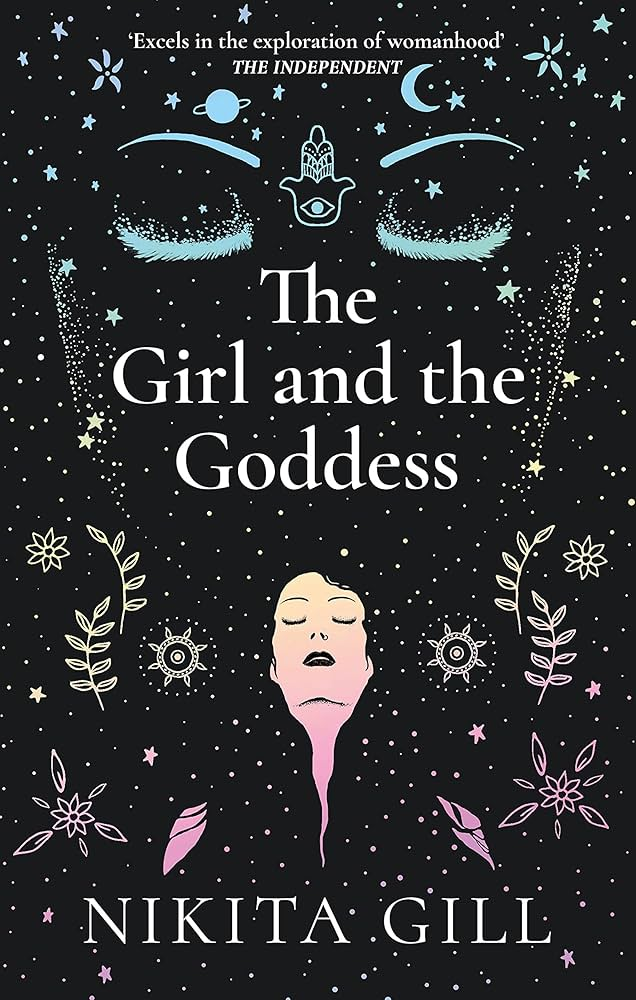
Nature and the cosmos also play a significant role in the imagery of the book. Gill frequently uses elements such as the moon, stars, oceans, and forests to symbolize growth, change, and interconnectedness. These natural metaphors reinforce the idea that transformation is a universal process, and that just as nature evolves, so too do individuals. The connection between the human spirit and the natural world adds a layer of spiritual depth to the collection.
Another notable aspect is its inclusivity. While rooted in specific mythological traditions, the themes it explores are universal. Readers from diverse backgrounds can find meaning in its messages of courage, healing, and self-discovery. Gill’s work transcends cultural boundaries, offering insights that resonate on a deeply human level.

...
...

...

...