India and UK Solidify Vision 2035 with Focus on Education, Climate, and Defense Following Prime Ministerial Summit
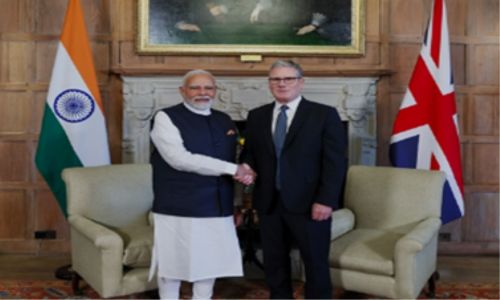
In October 2025, India and the United Kingdom reaffirmed and strengthened their long-term strategic partnership through a high-level summit between Prime Minister Narendra Modi and British Prime Minister Sir Keir Starmer. This meeting built on groundwork laid earlier that year, including the signing of the India-UK Comprehensive Economic and Trade Agreement (CETA) and the adoption of the expansive India-UK Vision 2035 roadmap. Leaders from both nations used this summit to articulate a shared vision for cooperation over the next decade, underpinned by common democratic values, mutual respect, and a desire to contribute meaningfully to global peace, security, and sustainable development.
At the heart of the joint statement is Vision 2035, a ten-year strategic framework that sets ambitious goals to deepen cooperation across multiple sectors. This roadmap reflects a mutual commitment to transform the bilateral relationship into a more comprehensive and impactful partnership that benefits both countries economically, socially, and geopolitically. Vision 2035 builds on the Comprehensive Strategic Partnership and emphasizes a future-oriented agenda designed to address global challenges, advance shared interests, and create synergies across economic growth, innovation, security, climate action, education, and people-to-people ties.
A central theme of the joint statement is leveraging the Comprehensive Economic and Trade Agreement (CETA) as a foundational mechanism to spur inclusive economic development and strengthen trade linkages. CETA is envisioned not just as a trade deal but as a catalyst for deeper integration, increased market access, and expanded bilateral investment. The agreement aims to eliminate tariffs on the majority of goods and services traded between the two nations, creating a fruitful environment for businesses, stimulating job creation, and expanding opportunities for entrepreneurs and investors from both sides. This economic cooperation is intended to foster sustainable growth, reinforce supply chains, and enhance resilience in global markets.
Education and skills development emerge as vital pillars of the Vision 2035 agenda. Recognizing education as a key driver of innovation, productivity, and human capital development, both countries committed to substantial enhancements in academic exchange and collaboration. A landmark outcome of the summit was the announcement that several leading British universities will open campuses in India. This initiative is expected to increase access to world-class higher education for Indian students, foster cross-cultural academic exchange, and build a pipeline of skilled graduates equipped to meet the demands of the 21st-century economy. The expansion of transnational education links is also intended to facilitate joint research, collaborative degree programs, and shared expertise across disciplines. By deepening educational cooperation, both countries aim to nurture future leaders, empower youth, and strengthen people-to-people ties essential elements for a vibrant and enduring strategic partnership.
Climate change and clean energy cooperation form another cornerstone of the Vision 2035 collaboration. Both India and the UK reiterated their commitment to ambitious climate action aligned with global goals for emissions reduction, clean energy transition, and climate resilience. The joint statement outlines plans for intensified cooperation on renewable energy technologies, climate finance, and sustainable infrastructure. Joint efforts are expected to accelerate the deployment of clean technologies such as solar, wind, and green hydrogen and support programs that enhance energy efficiency. By pooling resources, expertise, and policy frameworks, both nations seek to drive innovation in climate solutions, mobilize investment in low-carbon initiatives, and create economic opportunities in emerging green sectors.
Defense and security cooperation remains a high priority within the Vision 2035 framework. The joint statement reaffirmed a strong commitment to deepen defense ties, enhance interoperability, and collaborate on emerging security challenges. Both countries agreed to bolster joint military exercises, share best practices in defense training, and pursue co-development and co-production of advanced defense technologies. As part of this agenda, India and the UK agreed on specific defense procurements and industrial partnerships, reflecting a practical commitment to reinforce mutual security interests. The defense component of Vision 2035 also includes cooperation in areas such as cyber security, maritime security in the Indo-Pacific region, space security, and counterterrorism efforts.
An often understated but critical aspect of Vision 2035 is the emphasis on people-to-people connections. Beyond official state interactions, both countries seek to encourage deeper cultural, educational, and professional exchanges. This includes facilitating easier mobility for students, professionals, and researchers, as well as enhancing tourism, artistic exchange, and business collaboration. Such connections are intended to build trust, mutual understanding, and lasting relationships at the individual and community levels.
Throughout the summit, leaders from India and the UK reiterated their belief that a robust bilateral partnership can serve as a force for global stability, prosperity, and innovation. They emphasized that their cooperation is rooted not just in mutual benefit but in shared values of democracy, freedom, and the rule of law. This alignment of values, leaders noted, provides a strong foundation for collaborative leadership on the world stage.