Delhi’s Green Dharma: How EV Policy 2026 is Driving India Towards a Cleaner Future
Backed by ₹15,000 crore, Delhi's new transport roadmap harmonizes Vedic ecological values with cutting-edge electric mobility and transparent digital subsidies.
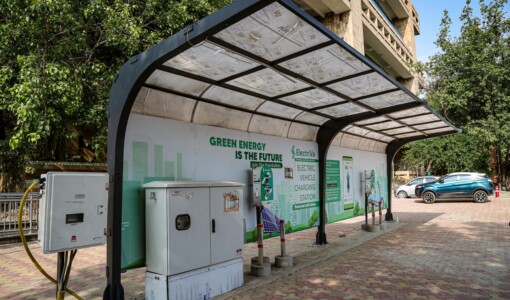
For centuries, Sanatan Dharma has taught humanity that nature is not merely a resource to be consumed, but a sacred inheritance to be protected. Rivers are revered as mothers, trees are worshipped as symbols of life, and the Earth itself is honored as Bhumi Devi. In an age where air pollution threatens public health and environmental balance, these ancient values have become more urgent than ever.
In a landmark step towards sustainable development, the Delhi Government has officially approved the Delhi EV Policy 2026, backed by an unprecedented investment of ₹15,000 crore over the next four years. The policy aims to transform India’s capital into one of the nation’s cleanest and most environmentally responsible metropolises by accelerating EV adoption, expanding high-speed charging networks, and phasing out fossil-fuel dependency.
A Decisive Long-Term Mobility Roadmap
Delhi has long grappled with severe winter smog, where vehicular emissions contribute heavily to dangerous particulate levels. The new policy approaches clean transportation as a fundamental public health mission.
Beginning in 2027, only electric auto-rickshaws will be newly registered in Delhi. From 2028, the registration of new petrol and CNG two-wheelers will gradually end, encouraging citizens to transition to zero-emission two-wheelers. To support this shift, the government is rolling out extensive charging plazas, swappable battery networks, and streamlined consumer incentives.
— Atharva Veda
The EV Subsidy Portal: Empowering the Green Economy
Complementing the policy, Chief Minister Rekha Gupta launched the Delhi EV Subsidy Portal, offering direct financial assistance of up to ₹1 lakh for eligible EV buyers. The paperless digital portal provides transparent, expedited processing for buyers of electric two-wheelers, three-wheelers, commercial logistics vehicles, and cars.
Beyond eliminating tailpipe emissions, electric mobility slashes daily operating costs for commercial operators—including cab aggregators, delivery executives, and auto drivers—boosting disposable incomes while creating hundreds of green tech jobs across battery servicing, solar charging, and smart grid software.
Harmonizing Technology with Dharma
Modern technology and Sanatani philosophy stand united in this green revolution. Choosing clean transport is more than a technological shift; it is an act of Dharma—fulfilling our collective duty towards Mother Earth and securing the well-being of future generations.