Delhi Government Approves ₹2.2 Billion Kirari Drainage Redevelopment Project under Drainage Master plan 2025
The Delhi Government has approved the Kirari Drainage Redevelopment Project with an outlay of ₹2.2 billion under the Drainage Master plan 2025, marking a major step toward resolving long-standing waterlogging and flooding issues in north-west Delhi. This project is the first major infrastructure initiative to be cleared under the newly adopted master plan and reflects a strategic shift toward comprehensive, long-term drainage solutions rather than temporary measures.
Kirari and surrounding areas in north-west Delhi have historically been among the city’s most waterlogging-prone zones. Localities such as Nangloi, Mundka, Bawana and adjoining residential clusters face severe flooding during the monsoon season due to low-lying terrain, dense population, and inadequate drainage infrastructure. Over the years, rapid and largely unplanned urban growth has placed enormous pressure on an already overstretched storm water system. Even moderate rainfall often leads to submerged roads, damaged homes, disrupted transport and heightened public health risks.
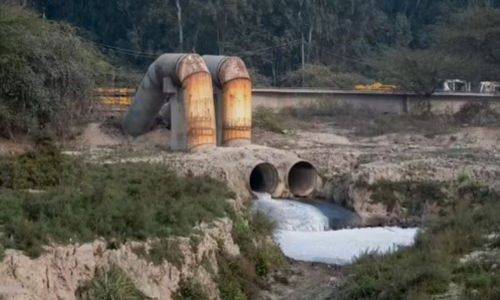
Until now, the area depended largely on a limited and outdated drainage network that lacked the capacity to handle increased runoff. Existing drains were narrow, silted and frequently encroached upon, causing water to stagnate for days. The absence of a dedicated trunk drainage system meant that storm water had no effective outlet, resulting in repeated flooding year after year. These conditions highlighted the urgent need for a scientifically planned and engineered solution.
The Kirari Drainage Redevelopment Project was approved by the Expenditure Finance Committee of the Delhi Government following a proposal submitted by the Irrigation and Flood Control Department. The project is designed as a flagship intervention under the Drainage Master plan 2025, which aims to modernize Delhi’s storm water infrastructure that has seen little comprehensive planning since the 1970s.
At the core of the project is the construction of a 4.5-kilometre long trunk drainage pipeline that will serve as the main storm water carrier for the Kirari basin. The drain will be capable of handling a discharge capacity of approximately 760 cusecs, ensuring that rainwater from surrounding residential, industrial and semi-urban areas is swiftly channeled away. The alignment of the drain has been planned along railway land to minimize displacement and land acquisition challenges.
The project will be executed in two phases and is targeted for completion by 2027. Authorities have indicated that the tendering process will begin soon, followed by phased construction to ensure minimal disruption to daily life in the affected areas. A tripartite coordination framework involving the Irrigation and Flood Control Department, the Municipal Corporation of Delhi, the Public Works Department, the Delhi Development Authority and Northern Railway has been put in place to ensure smooth execution.
In addition to the main trunk drain, the project includes the integration and up gradation of feeder drains that connect neighborhood’s and colonies to the larger drainage network. This interconnected approach is expected to improve the overall efficiency of storm water management, preventing bottlenecks and overflow points during periods of heavy rainfall.
The benefits of the project are expected to extend to more than 70 unauthorized and regularized colonies across the region. Areas such as Veena Enclave, Ratan Park, Rajdhani Park, Shiv Ram Park, Adhyapak Nagar, Ram Nagar, Niloothi village, Ranikhera industrial area and parts of Rohini sectors 20, 21 and 22 stand to gain significantly. Residents of these localities have long endured flooded streets, damaged infrastructure and health hazards during the monsoon season.
Once completed, the new drainage system is expected to drastically reduce waterlogging, improve road connectivity, and enhance sanitation conditions. Improved drainage will also support economic activity in industrial pockets by preventing production disruptions caused by flooding. From a public health perspective, better water evacuation will reduce the incidence of waterborne diseases that typically surge during prolonged stagnation of rainwater.
The Kirari project fits into the broader vision of the Drainage Master plan 2025, which divides Delhi into three major drainage basins and proposes a citywide overhaul of storm water management systems. The master plan envisions modern engineering solutions, improved hydrological modeling, de silting of major drains and better coordination between sewer and storm water systems. With a total proposed investment running into tens of thousands of crores, the plan represents one of the most ambitious urban infrastructure initiatives undertaken by the capital.
While the project has been widely welcomed, its success will depend on timely execution, inter-departmental coordination and sustained maintenance after completion. Challenges such as utility relocation, traffic management during construction and protection of the drainage corridor from future encroachments will need careful handling.
Overall, the approval of the Kirari Drainage Redevelopment Project signals a decisive move by the Delhi Government toward addressing chronic waterlogging issues through planned, large-scale infrastructure investment. If implemented as envisioned, the project could transform one of the city’s most flood-affected regions and set a strong precedent for future drainage interventions across Delhi.

...
...

...

...