Manish Tiwari Honored for Research on the Economic Contributions of the Indian Diaspora
Manish Tiwari, a leading researcher and entrepreneur, was recently honored for his groundbreaking work examining the economic contributions of the Indian diaspora in the United Kingdom. His research has provided new insights into how one of the largest migrant communities in Britain has shaped the national economy through entrepreneurship, innovation, employment and community engagement.
Tiwari’s research spans several years and draws on extensive data analysis, interviews with business owners and community organizations, and comparative economic studies. At its core, the work highlights not only the scale of Indian diaspora economic activity but also the qualitative impact this activity has had on local communities, regional economies and national growth. Tiwari’s findings show that Indian-origin entrepreneurs have established thriving enterprises across sectors including technology, hospitality, retail, healthcare, finance and professional services.
Recognition for Meaningful Research
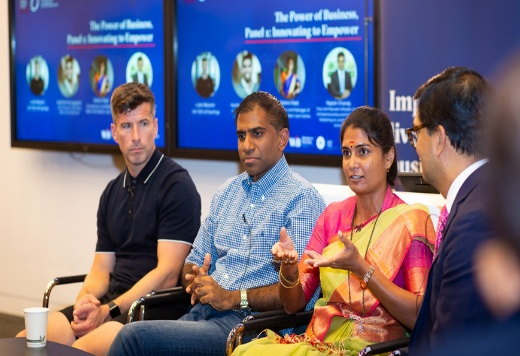
At a prestigious event attended by business leaders, policymakers and community representatives, Manish Tiwari was honored for his contributions to economic understanding and social discourse. The recognition celebrated both his academic rigor and his ability to translate complex data into narratives that resonate with a wide audience. Speakers at the event praised Tiwari’s work for illuminating how diaspora communities contribute to economic resilience and for encouraging more inclusive economic policies.
Entrepreneurship Within the Indian Diaspora
One key theme of Tiwari’s research is the entrepreneurial culture within the Indian diaspora. His studies show that cultural values such as hard work, family support, resilience and emphasis on education play a significant role in driving business success. Many Indian-origin entrepreneurs in the UK trace their business roots to family traditions of trade and enterprise, while others combine professional qualifications with strategic risk-taking to launch innovative ventures.
Opportunities and Challenges
Tiwari’s work also explores how Indian diaspora entrepreneurs navigate the challenges of operating in a foreign economy. His interviews reveal a mix of promising opportunities and persistent barriers. On the opportunity side, many entrepreneurs highlight London and other UK cities as hubs for access to talent, resources and global networks. They see Britain’s multicultural environment as an advantage, enabling them to connect with international markets, secure diverse customer bases and form strategic partnerships.
At the same time, Tiwari’s research acknowledges challenges such as access to funding, especially for small businesses; regulatory complexities; and the need for stronger mentorship networks. His work has made practical recommendations for how local governments, financial institutions and community organizations can better support migrant entrepreneurs. These recommendations focus on expanding access to early-stage capital, providing culturally sensitive business advisory services, and fostering stronger links between diaspora networks and mainstream economic institutions.
Conclusion
Another significant facet of Tiwari’s research is the ripple effect of Indian diaspora business activity on job creation and community development. His data shows that Indian-owned enterprises not only provide employment for members of the diaspora but also for people from diverse backgrounds. These businesses contribute to skill development and often reinvest profits locally, generating positive economic spillover effects in the regions where they operate.

...
...

...

...