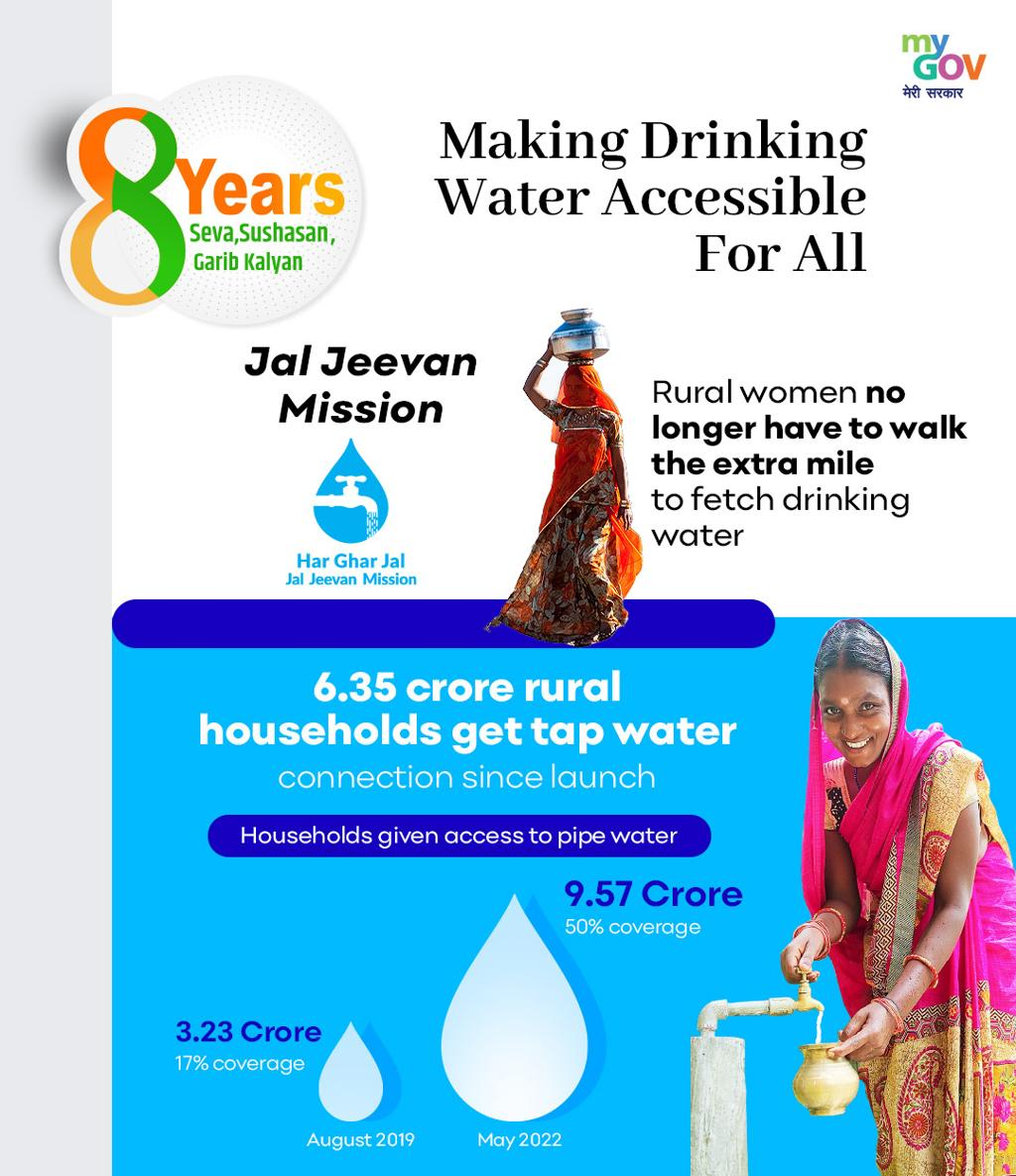
Jal Jeevan Mission Achieves 90% Rural Tap Water Connectivity Milestone in West Bengal
West Bengal has achieved a significant milestone under the Jal Jeevan Mission, with over 90% of rural households now having access to tap water connections. This accomplishment marks a major step forward in improving the quality of life in villages and ensuring equitable access to safe and reliable drinking water.
Launched the vision of providing functional household tap connections to every rural home, the Jal Jeevan Mission has transformed water accessibility across the state. In West Bengal, the rapid progress has been driven by coordinated efforts between central and state authorities, local governance bodies, and community participation. Village Water and Sanitation Committees have played a crucial role in monitoring usage and maintaining infrastructure the emphasis on last-mile connectivity has ensured that even remote and previously underserved regions are now benefiting from this essential service.
One of the key impacts of this achievement is the improvement in public health. Access to clean drinking water has significantly reduced the incidence of waterborne diseases, particularly among children and the elderly. Women, who traditionally bore the burden of fetching water from distant sources, have also experienced a substantial improvement in their daily lives. The availability of tap water at home has freed up time for education, livelihood activities, and overall well-being.
The implementation strategy has focused on sustainable water management practices, including source strengthening, rainwater harvesting, and groundwater recharge. Local communities have been actively involved in planning and maintaining water supply systems, ensuring long-term sustainability and accountability. Village Water and Sanitation Committees have played a crucial role in monitoring usage and maintaining infrastructure.
Technological integration has further enhanced the efficiency of the mission. Real-time monitoring systems, digital dashboards, and geo-tagging of assets have enabled better tracking of progress and timely resolution of issues. These innovations have ensured transparency and improved service delivery across districts.
...
...

...
...