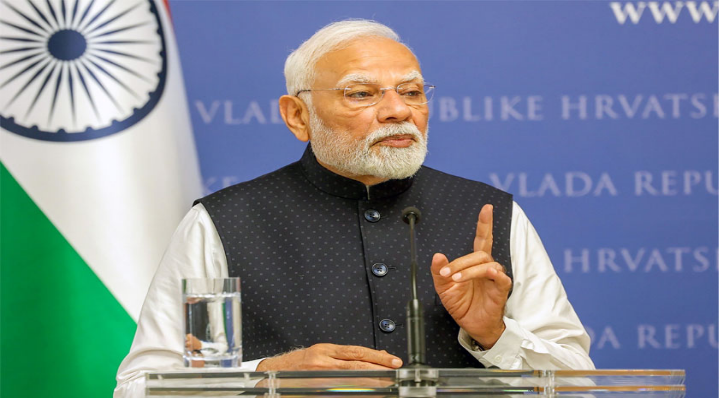
Under PM Modi, India Becomes the Global South’s Leading Advocate on the World Stage
Under the dynamic leadership of Prime Minister Narendra Modi, India has rapidly transformed into a principal voice of the Global South, championing the concerns, aspirations, and rights of developing nations on global platforms. As the world grapples with rising geopolitical complexities, economic inequality, and climate challenges, India has confidently stepped up as a representative and bridge-builder for countries often underrepresented in global decision-making forums.
This strategic shift is not accidental but a result of deliberate diplomatic efforts, economic strengthening, and an assertive foreign policy built on shared values, cooperation, and mutual respect.
A Renewed Global Role for India
Prime Minister Modi’s foreign policy has focused on rebalancing global power by ensuring the voice of developing countries is not sidelined. Whether at the G20 Summit, the United Nations General Assembly, or regional multilateral engagements, India has consistently advocated for fairer global governance structures. During India’s G20 Presidency in 2023, Modi ensured that the Global South’s concerns—such as debt distress, food security, health equity, and climate resilience—were front and center.
The historic Voice of Global South Summit, hosted virtually by India in early 2023, brought together over 120 developing nations, creating a forum to express collective concerns and chart a common path forward. This event positioned India as a convener and leader—uniting voices across Africa, Asia, and Latin America—on issues ranging from equitable development financing to technology access.
Championing Development and Equity
India’s commitment to development-centric diplomacy has been evident in its initiatives focused on sustainable growth, energy transition, climate action, and digital empowerment. Under PM Modi, India has provided financial aid, infrastructure expertise, and technical support to numerous countries, especially in Africa, South Asia, and Southeast Asia.
The International Solar Alliance (ISA), spearheaded by India, is a prime example of global South cooperation on clean energy. India’s leadership in this coalition has empowered developing countries to pursue affordable solar energy while building green capacity. Similarly, through the Global Biofuel Alliance and promotion of Digital Public Infrastructure, India is helping nations leapfrog into the digital age with indigenous, scalable, and affordable models.
PM Modi’s philosophy of “One Earth, One Family, One Future”, promoted during India’s G20 leadership, underscores an inclusive and human-centric development agenda.
Reforming Global Institutions
A significant aspect of PM Modi’s Global South vision is reforming international institutions to reflect contemporary realities. India has vocally demanded structural changes in the United Nations, World Bank, IMF, and WTO, emphasizing the need for equitable representation and voice for emerging economies.
PM Modi’s call for the African Union to be granted full membership in the G20—which was accepted during India’s G20 Presidency—demonstrates India’s practical commitment to institutional inclusiveness. By empowering African leadership within global frameworks, India reinforces the principle of multipolarity and diversity in international governance.
Balancing Geopolitics with Strategic Autonomy
India’s rise as the Global South’s advocate has been marked by strategic autonomy—neither succumbing to Western hegemony nor aligning blindly with any bloc. In the face of the Russia-Ukraine conflict, PM Modi’s independent and balanced diplomacy received global attention. While standing for peace and dialogue, India maintained its energy needs through continued engagement with Russia—without compromising international credibility.
This balanced approach has earned India respect from both the Global North and South, enhancing its reputation as a dependable partner focused on stability, growth, and dialogue.
South-South Cooperation Reimagined
India’s development assistance, training programs, and humanitarian efforts reflect a bottom-up model of South-South cooperation. Through schemes like the Indian Technical and Economic Cooperation (ITEC), thousands of professionals from developing countries receive training across sectors. India has also extended line of credit programs, grants, and disaster relief aid to several nations, often without conditionalities or political strings attached.
In COVID-19 times, India’s “Vaccine Maitri” mission, where millions of doses were sent to countries in Africa, Asia, and Latin America, was widely lauded as an act of solidarity rather than diplomacy. This gesture solidified India’s moral authority among developing nations and showcased its role as a responsible global power.
The Road Ahead
As India moves toward becoming the third-largest economy, its responsibility and role in shaping global discourse will only grow. Under PM Modi’s leadership, the nation continues to project a narrative of inclusive growth, dignity, and sovereignty for all nations—regardless of size or wealth.
India’s expanding diplomatic engagements, from QUAD to BRICS to bilateral outreach in the Pacific, South America, and Africa, show that the country is positioning itself not just as a regional power but as a moral and developmental force for the Global South.
By aligning its national interests with global justice, PM Modi’s India has taken on the mantle of a civilizational state with a modern mission—to create a world order that is more just, balanced, and rooted in mutual respect.
...

...

...
...