Sacred Rivers of Bharat: Life-Givers in Hindu Civilization
Rivers in the Indian subcontinent have long been revered not merely as geographic features but as sacred lifelines woven into the spiritual, cultural and ecological fabric of Hindu civilization. In Bharat (India), rivers are venerated as living entities, embodiments of divine energy, and sources of sustenance for humans, animals, plants, agriculture and entire civilizations. This reverence is rooted in ancient philosophy, mythology, ritual practice and lived experience, shaping social values, cultural traditions and ecological consciousness over millennia.
The sacred status of rivers in Hindu thought arises from a worldview that sees the natural world as infused with divinity. Water, in this context, is not just a physical element but a spiritual medium of purification, renewal and life itself. The earliest Hindu texts, including the Vedas, celebrate rivers as goddesses and cosmic forces. The Rigveda praises the Saraswati River as a mighty and life-giving presence, while other key rivers receive hymns that acknowledge their nurturing power and divine aspects. These texts reflect an understanding of rivers as central to both worldly survival and spiritual well-being.
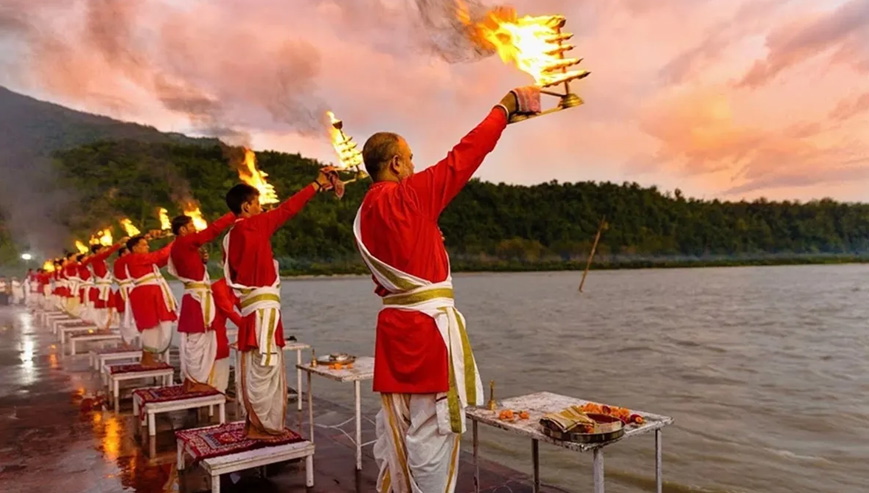
Among all rivers, the Ganga occupies the most exalted status in Hindu consciousness. Revered as the mother of all rivers, the Ganga is worshipped as a goddess who descends from the heavens to cleanse sins and grant liberation. Pilgrims undertake journeys to her banks to bathe in her waters, believing that such acts purify the body and soul. Cities and pilgrimage sites along the Ganga — from Gangotri in the Himalayas to Varanasi on the plains — serve as major centers of religious life, festivals, and rites of passage including birth rituals, marriages, and final rites. The river thus serves both ecological and spiritual purposes, sustaining communities physically while anchoring them in cultural identity and belief.
Other rivers are similarly revered. The Yamuna, Krishna, Narmada, Godavari and Kaveri are celebrated not only for their geographical roles but also for their mythic narratives and spiritual associations. The Yamuna, flowing by the sacred city of Mathura, is linked to the childhood exploits of Krishna and is celebrated during festivals that draw thousands of devotees. The Godavari, often referred to as the “Ganga of the South,” hosts massive congregations during pushkaram festivals, where pilgrims gather every twelve years to seek spiritual merit.
Rivers as Living Heritage
These rivers are also centers of rich ritual practices that express both devotion and ecological gratitude. Ritual bathing, offerings, song, prayer and seasonal festivals are ways in which communities engage with rivers as living presences. Riverbanks host daily rites and life cycle rituals, firmly integrating rivers into the rhythms of community life. The practice of offering floral tributes and lighting lamps carried on water bridges personal devotion with a sense of cosmic harmony, acknowledging water as a source of life and spiritual sustenance.
An important philosophical dimension of river reverence in Hindu civilization is the idea of cyclical time and continuity. Rivers, ever flowing yet ever present, embody a sense of eternal flux that aligns with Hindu cosmological concepts of birth, death and rebirth. They symbolize continuity through change, teaching that all life is interconnected and impermanent. This philosophical framing encourages respect for the natural world and cultivates a sense of sacred responsibility toward ecological stewardship.
The reverence for rivers also historically translated into cultural practices that acknowledged their economic and agrarian importance. River basins supported the rise of great civilizations by providing fertile soils, water for irrigation, fish and trade routes. The Indus Valley Civilization, one of the world’s earliest urban cultures, flourished along the Indus and its tributaries, demonstrating the indispensable role of rivers in human settlement and societal development. In later periods, kingdoms and empires continued to invest in water management, linking the prosperity of cities and temples to the health of rivers and irrigation systems.
However, the sacred relationship between humans and rivers, rooted in reverence and dependence, has faced profound challenges in the modern era. Industrial pollution, urban waste, dam projects, deforestation, climate change and unplanned development have taken a heavy toll on river ecosystems across Bharat. Rivers long celebrated as pure and life-giving now carry toxic effluents, suffer from encroachment and face reduced flow due to unsustainable water use. These ecological stresses have not only harmed biodiversity but have also disrupted cultural and spiritual practices tied to rivers.
Conclusion
In response to these challenges, religious leaders, environmental activists, scholars and communities have worked to revive both the ecological health and cultural centrality of sacred rivers. Initiatives to clean river waters, restore natural flows, reduce pollution and engage local communities in conservation reflect a renewed understanding that reverence must be matched with responsibility. Many movements draw on traditional ecological knowledge and spiritual values to motivate practical stewardship, bridging ancient reverence with contemporary conservation needs.
...
...
...

...