Nine UK Universities Approved to Open Campuses in India
In 2025, Government of India and Government of the United Kingdom finalized a landmark free trade agreement widely seen as one of the most ambitious bilateral trade deals in decades. This agreement not only promises sweeping tariff reductions and expanded market access, but also underpins an expanded collaboration in higher education. Under its provisions and complementary educational reforms, nine major UK universities have now received approval to open branch campuses within India.
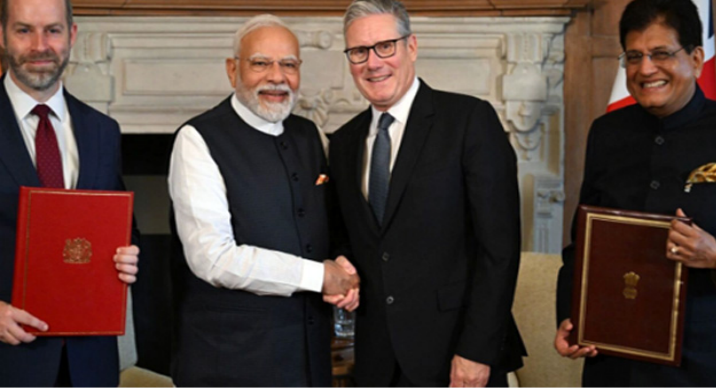
During his October 2025 visit to India, Keir Starmer and Narendra Modi jointly endorsed the educational expansion part of a broader bilateral strategy covering trade, investment, technology, and research and people-to-people exchange. As a result, Indian students will soon be able to access world-class UK-style degrees domestically, while UK universities gain a foothold in one of the world’s fastest growing markets.
A New Era for Higher Education
This approval stems from India’s ongoing reforms under the National Education Policy 2020 (NEP 2020), which encourages foreign universities to establish branch campuses in India. The establishment and planned expansion of these campus operations reflect growing acceptance of global scale education within the Indian domestic system.
For Indian students, this push holds transformative potential. Rather than travelling abroad to secure a UK degree, many will be able to study similar program often identical in curriculum and accreditation within India. This means lower costs, cultural comfort, and easier access to global-standard education. It can also significantly expand access: including to students from smaller cities or more modest backgrounds who might previously have ruled out overseas study due to costs or visa constraints.
Strengthening the India–UK Partnership
Moreover, this expansion dovetails with broader trade and investment cooperation under the new Free Trade Agreement. As trade, technology, defense, climate and research partnerships expand, having an aligned education-collaboration framework helps ensure skilled manpower, shared knowledge, and joint innovation deepening the strategic dimension of India UK relations.
Challenges Ahead
The plan is ambitious, but execution will matter. For students and universities alike: ensuring quality control, regulatory coordination, accreditation equivalence, faculty recruitment, infrastructure standards, and cultural integration will be critical. For India, managing demand, ensuring equitable access, and integrating these campuses into the broader higher-education ecosystem including public universities and technical institutes will be a challenge.
For the UK universities, delivering on promise maintaining the quality and global standards, offering competitive fees and support, and adapting to Indian regulatory and social landscape will be the to key success.
Conclusion
In sum, the combination of a sweeping Free Trade Agreement and the approval for nine major UK universities to open campuses in India signals a new era in India UK relations. This is more than just trade it is a comprehensive partnership spanning education, innovation, human capital, research, and future readiness. For millions of Indian students and families, it offers a once-in-a-generation opportunity. And for both nations, it builds a durable bridge where economic growth, knowledge sharing, and global collaboration walk hand in hand.

...
...

...
...