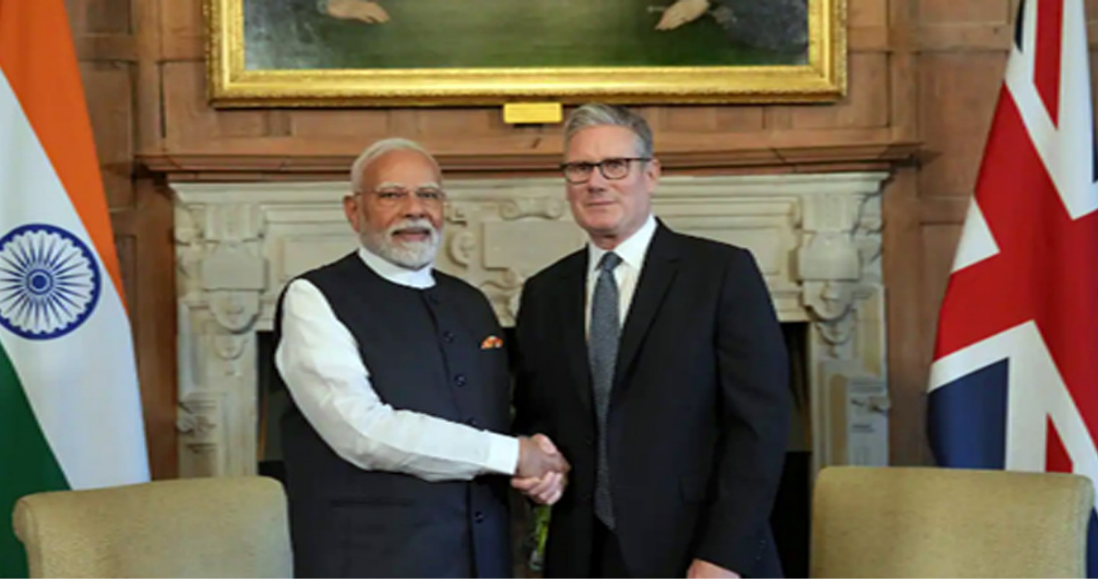
Keir Starmer’s Historic Visit Ushers in a New Era of India–UK Partnership
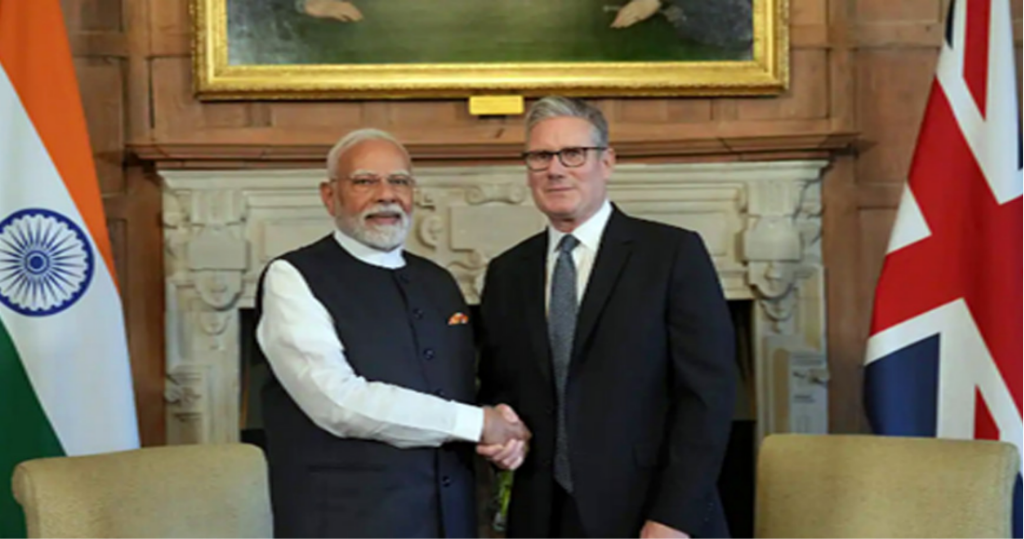
UK Prime Minister Keir Starmer’s historic official visit to India marked a significant milestone in the evolving relationship between the two democracies. Taking place at a pivotal moment for both nations, the visit underscored a renewed commitment to deeper cooperation across economic, strategic, technological, educational, and cultural domains. Starmer’s meetings with Prime Minister Narendra Modi set the stage for a forward-looking partnership designed to shape the next decade of India–UK engagement.
This was Starmer’s first official visit to India since taking office, and the symbolism was powerful. The UK leader arrived with a high-level ministerial team and a large delegation of business and academic leaders, signaling that London sees New Delhi as a crucial global partner. India, with its fast-growing economy and expanding influence, offered Starmer an opportunity to strengthen ties at a time when the UK seeks to redefine its global position.
Landmark Agreements
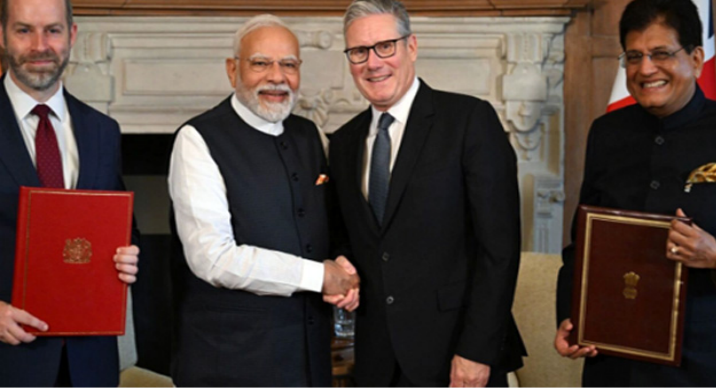
The highlight of the visit was the signing of a set of landmark partnership agreements that build upon the momentum created earlier in the year. The two sides reaffirmed their commitment to a Comprehensive Economic and Trade Agreement (CETA), a long-term Vision 2035 roadmap, and a Defense Industrial Roadmap. These frameworks lay out an ambitious agenda for joint cooperation, market access, investment flows, defense collaboration, and people-to-people exchange.
Economic Cooperation
Economically, the visit was particularly significant. Both countries agreed to accelerate the implementation of trade liberalization measures that promise to benefit a wide range of industries. The removal or reduction of tariffs aims to provide near-zero duty access for a majority of goods traded between the two nations. Indian sectors such as textiles, leather, gems and jewelry, engineering goods, marine products, and auto components are expected to gain substantially. On the UK side, expanded opportunities were discussed for exports in high-quality manufacturing, premium consumer goods, professional services, and advanced technologies.
A key highlight was the mutual intention to double bilateral trade by the end of the decade. This target reflects not only ambition but confidence in the complementary economic strengths of the two nations. India brings scale, talent, and manufacturing capacity, while the UK contributes expertise in finance, advanced research, innovation, and high-end technology. Together, they aim to create a relationship that is resilient, growth-driven, and mutually beneficial.
Technology & Innovation
Technology and innovation featured prominently in the visit’s agenda. Both sides agreed to deepen collaboration in areas such as artificial intelligence, clean energy, digital public infrastructure, semiconductor development, biotechnology, and advanced manufacturing. The aim is to align strengths and create innovation ecosystems that benefit industries and citizens in both nations. Given India’s digital transformation and the UK’s technological expertise, this cooperation holds promise for breakthrough advancements in science and innovation.
Defense & Security
Defense and security cooperation received strong emphasis as well. The Defense Industrial Roadmap provides the foundation for co-development and co-production of defense systems. Both countries recognize the strategic value of such collaboration in an increasingly complex global security environment. Joint research, technology sharing, maritime security cooperation, counter-terrorism, and cyber security form the backbone of this partnership. The leaders also reaffirmed their shared commitment to combating extremism and fostering stable, secure Indo-Pacific dynamics.
Climate & Sustainability
Climate change and sustainability were another common focus. Both nations agreed to enhance cooperation in renewable energy, green hydrogen, sustainable finance, waste management, and climate-resilient infrastructure. Given the global urgency of climate commitments, the partnership aims to model responsible leadership and provide practical solutions for greener development.
People-to-People Connections
The visit also highlighted the deep people-to-people connections between India and the UK. With one of the largest and most influential Indian diasporas in the world, the UK values its human bridge to India. Cultural exchanges, tourism, mobility partnerships, and creative collaboration were emphasized as means to strengthen these ties. Celebrating shared democratic values, cultural diversity, and historical links, both leaders expressed optimism for a future of greater social and cultural engagement.
Global Strategic Importance
The geopolitical context adds important weight to this visit. As global power balances shift and nations navigate strategic competition, supply chain security, and conflict zones, India and the UK see each other as essential global partners. The leaders discussed major global developments and reaffirmed their commitment to international law, peaceful resolution of conflicts, and humanitarian principles. Their shared positions reflect a desire to contribute meaningfully to global stability and cooperation.
Conclusion
Ultimately, Starmer’s visit was not just ceremonial; it was strategic, comprehensive, and future-oriented. The agreements signed and the discussions held underscore a clear message: the India–UK partnership is evolving from a historically rooted relationship into a dynamic, modern alliance built on converging interests and shared aspirations. With frameworks like CETA, Vision 2035, and the Defense Industrial Roadmap guiding this transformation, both countries appear poised to build a partnership that is not only mutually beneficial but also influential on the global stage.
...
...

...
...